Organic Shape: A Dingbat Font for Retro-Modern Flair
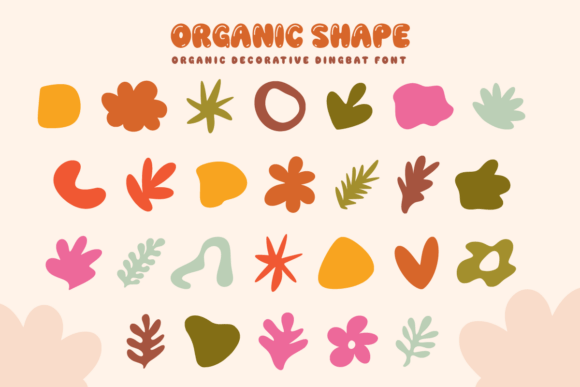
Sometimes, a project needs more than just words. It needs a feeling—a sense of playful energy, a touch of handmade warmth, or a burst of abstract color. This is where the Organic Shape Dingbat Font steps in. Forget everything you know about traditional typefaces; this is a premium font that swaps letters for a vibrant library of decorative blobs, painterly leaves, and whimsical flora. Inspired by the fluid lines and earthy palettes of mid-century modern design, it’s a tool for adding instant personality.
Imagine a font where pressing "A" gives you a smooth, irregular blob in terracotta, and "B" yields a stylized fern in olive green. That's the core of Organic Shape. It’s a creative font designed not for body text, but as a collection of design assets. Its visual character is soft, irregular, and inherently friendly. The shapes feel hand-painted or screen-printed, avoiding the sterile perfection of digital vectors. This gives your work a tactile, human quality that resonates in an age of over-polished graphics.
Where This Creative Font Truly Shines
The versatility of a dingbat font like this is its greatest strength. It’s a secret weapon for designers and creators across many fields. For brand identity projects, especially those for boutiques, cafes, artisan makers, or eco-conscious brands, these shapes can become the cornerstone of a visual system. Use them as decorative motifs in a logo, as repeating patterns on packaging, or as social media story highlights that feel cohesive and uniquely branded.
In editorial design and publishing, Organic Shape can break up dense layouts. Use a cluster of its glyphs as a section divider, a whimsical bullet point list, or a background pattern that adds depth without overwhelming your serif font or sans serif font headlines. For web design, these abstract elements can serve as engaging loading animations, custom cursor accents, or decorative borders that make a site feel more curated and less template-driven.
Entrepreneurs and marketers will find it invaluable for creating scroll-stopping social media graphics. A single, bold shape from the font can become a highlight cover, a frame for a quote, or a dynamic background element in a video. Its inherent style ensures your visuals have a consistent, professional aesthetic that boosts recognition. For packaging design, it offers a way to create labels and patterns that communicate authenticity and a connection to nature or craftsmanship.
Integrating Organic Shape Into Your Design Workflow
Using a dingbat font effectively requires a different approach than setting headlines. First, treat it as a collection of design assets. Open the glyph panel in your design software (like Adobe Illustrator, Photoshop, or Canva) to see and select each individual shape. This allows you to mix and match, scale, rotate, and color them independently, giving you endless creative combinations.
A key consideration is visual hierarchy. These shapes are decorative; they should support your message, not compete with it. Use them as accents around your primary typography—perhaps framing a headline set in a clean modern typography style or punctuating the end of a paragraph. Their irregular forms pair beautifully with structured, geometric typefaces. Try combining Organic Shape with a bold display font or a simple handwritten font for a balanced, engaging composition.
Always consider your project's context. While perfect for a bohemian jewelry brand's Instagram, it might not suit a corporate law firm's annual report. Test the shapes at the scale they'll be used. A tiny, intricate leaf might lose detail when used as a bullet point, while a large, simple blob can make a powerful background pattern. Before committing to a commercial project, review the font's license to ensure it covers your intended use, whether for client work, merchandise, or digital products.
Ultimately, Organic Shape is about embracing freedom and injecting a dose of retro-modern creativity. It’s a practical tool for anyone looking to add a distinctive, handmade feel to their work. By thinking of it as a versatile kit of parts rather than a traditional typeface, you can unlock its full potential to create designs that are visually engaging, memorable, and full of personality.